


Creating a magical fairy garden is one of the most delightful ways to bring whimsy and wonder to your home or yard. These miniature landscapes capture the imagination of both children and adults, offering a creative outlet that combines gardening, crafting, and storytelling. Whether you’re looking for indoor or outdoor projects, simple or elaborate designs, there’s a fairy garden idea perfect for every skill level and space.
Why Create a Fairy Garden?
Fairy gardens have been around for centuries in European folklore, where they were believed to explain the unexplainable – from weather changes to unusual natural phenomena. Today, they serve as a mindful, calming activity that encourages creativity and provides a magical escape from everyday life. They’re also wonderful educational tools for teaching children about plants, responsibility, and imaginative play.

1. Terracotta Pot Fairy Village
Transform simple terracotta pots into an enchanting fairy village. This classic approach involves painting small clay pots, adding moss for roofing, and creating doors and windows with craft materials. Stack different sized pots to create multi-level homes, and add pebble pathways between houses.
Materials needed: Terracotta pots, acrylic paint, moss, small stones, miniature furniture

2. Broken Pot Terraced Garden
Don’t throw away that broken pot! Turn it into a stunning multi-level fairy garden with natural terraces. The broken pieces create perfect steps and platforms for different garden levels, while trailing plants add a magical overgrown look.
Pro tip: Use the broken pieces strategically to create stairs, retaining walls, and cozy nooks for fairy furniture.

3. Teacup Miniature Gardens
Perfect for small spaces or gifts, teacup fairy gardens bring charm to any tabletop. Use vintage teacups and saucers to create tiny ecosystems with succulents, moss, and miniature accessories. These portable gardens are ideal for apartments or offices.
Best plants: Small succulents, baby tears, or preserved moss work perfectly in these confined spaces.

4. Beach-Themed Fairy Oasis
Create a coastal paradise for your fairy friends with sand, shells, and miniature beach accessories. Use a shallow planter filled with sand, add tiny beach chairs, umbrellas, and create a “shoreline” with blue glass pebbles representing water.
Special touches: Add a tiny lighthouse, driftwood pieces, and sea glass for authentic beach vibes.
Mod Podge Rocks Beach Tutorial

5. Mason Jar Night Light Garden
Combine functionality with magic by creating an illuminated fairy garden in a mason jar. Add battery-operated LED string lights, preserved moss, and tiny figurines to create a glowing wonderland that serves as both decoration and night light.
Lighting options: Solar lids, battery-operated fairy lights, or LED tea lights create beautiful ambient lighting.
The Country Chic Cottage Tutorial

6. Succulent Fairy Landscape
Succulents make excellent “trees” in fairy gardens due to their varied shapes, colors, and low maintenance needs. Create a desert fairy theme or use succulents to mimic different types of vegetation in your miniature world.
Advantage: Drought-tolerant and perfect for beginners or those who travel frequently.

7. Farmhouse Fairy Garden
Create a rustic fairy farm complete with a painted birdhouse, tiny tractors, hay bales made from twigs, and even a miniature clothesline. This theme is perfect for children who love farm animals and country settings.
Fun additions: Miniature farm animals, a weather vane, and tiny vegetables in the garden plots.
Kid Friendly Things to Do Tutorial
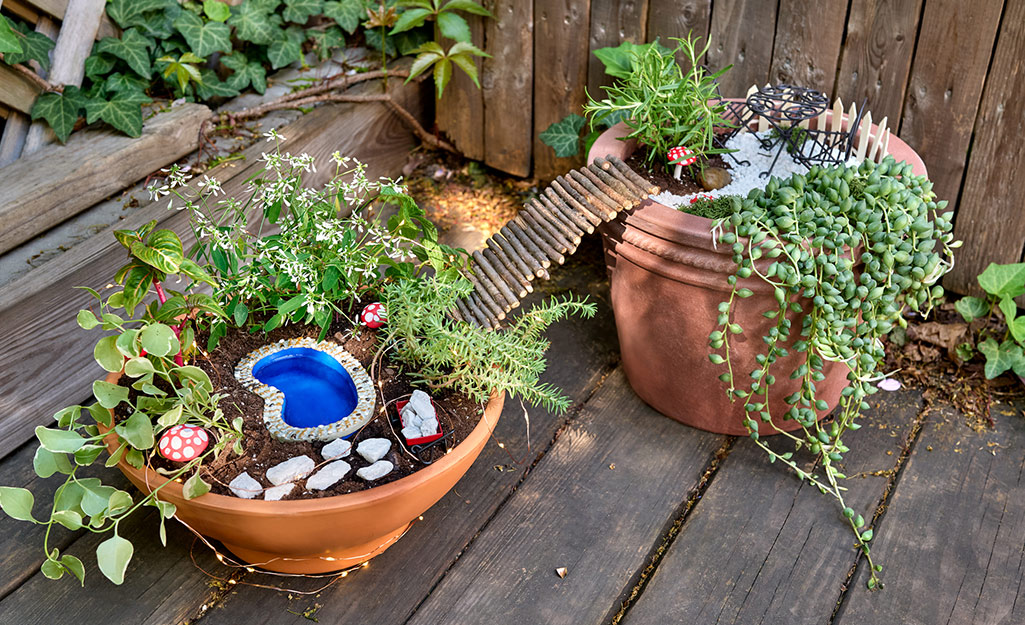
8. Natural Material Woodland Garden
Embrace the forest theme using only natural materials like twigs, acorns, pine cones, stones, and moss. This eco-friendly approach creates an authentic woodland setting that blends seamlessly with natural surroundings.
Seasonal adaptability: Easy to change decorations with the seasons using different natural elements.
9. Vertical Fairy Garden
Maximize space with a vertical garden design using wall planters, ladder displays, or tiered containers. This approach is perfect for small spaces and creates dramatic height variations in your fairy landscape.
Space-saving tip: Use hanging planters at different levels to create a multi-story fairy community.

Budget-friendly and kid-friendly, popsicle stick constructions allow for custom fairy architecture. Build tiny houses, bridges, fences, and furniture using craft sticks, then weather-proof them for outdoor use.
Weatherproofing: Use outdoor mod podge or clear sealant to protect wooden elements from moisture.
11. Fairy Garden Terrarium
Create a self-sustaining ecosystem in a glass container. Terrariums provide controlled environments perfect for delicate plants while showcasing your fairy world from all angles.
Plant selection: Choose plants with similar moisture and light requirements for a thriving terrarium ecosystem.
The Good Hearted Woman Tutorial

12. Seasonal Theme Gardens
Adapt your fairy garden for different seasons – Halloween pumpkin houses, Christmas winter wonderlands, spring flower festivals, or autumn harvest scenes. This approach keeps your garden fresh and exciting year-round.
Seasonal elements: Use seasonal plants, decorative elements, and color schemes to match each time of year.
Hello Gnome Decor Fall Tutorial
13. Miniature Water Features
Add movement and sound to your fairy garden with tiny water features. Use small pumps, mirrors as “ponds,” or create flowing streams with blue glass pebbles and hidden water circulation systems.
Simple water effects: Use a small mirror as a pond and surround it with pebbles and plants for a realistic water feature.
14. Upcycled Container Gardens
Transform everyday items into fairy gardens – old boots, colanders, wheelbarrows, or even large seashells. This approach adds personality while being environmentally friendly.
Container ideas: Vintage items tell stories and add character to your fairy world.

15. Interactive Play Gardens
Design fairy gardens specifically for children’s play, using durable materials and safe, moveable elements. Include multiple fairy houses, vehicles, and accessories that children can rearrange during imaginative play.
Child-safe materials: Use non-toxic paints, avoid small parts for young children, and choose sturdy construction methods.
Glitter on a Dime Kids Tutorial
Essential Tips for Success
Plant Selection
- Choose slow-growing plants proportional to your container size
- Consider light and water requirements when grouping plants
- Succulents, moss, and small perennials work best for most fairy gardens
Weather Protection
- Use outdoor sealants on wooden and painted elements
- Bring delicate items indoors during harsh weather
- Choose weather-resistant materials for permanent outdoor installations
Maintenance
- Regular watering and pruning keep plants healthy and proportioned
- Replace seasonal elements to keep gardens fresh and interesting
- Clean pathways and furniture periodically to maintain the magical appearance
Getting Started
Begin with a simple design using materials you already have at home. A basic fairy garden needs only:
- A container (pot, bowl, or designated garden area)
- Potting soil and drainage materials
- One or two small plants
- Basic decorative elements (stones, twigs, moss)
- A simple fairy house (store-bought or homemade)
As you gain experience and enthusiasm, you can expand with more elaborate themes, additional accessories, and multiple connected garden areas.
Where to Find Supplies
Plants and gardening supplies: Local nurseries, garden centers Miniature accessories: Craft stores, online fairy garden retailers, toy stores Natural materials: Your backyard, nature walks (with permission) Containers: Thrift stores, garage sales, your own kitchen cabinets
Creating fairy gardens is a journey of imagination and creativity. Each garden tells a unique story and reflects the personality of its creator. Whether you build a simple teacup garden or an elaborate outdoor fairy village, the magic lies in the joy of creating something enchanting with your own hands.
Start small, dream big, and let your imagination guide you into the wonderful world of fairy gardening. Remember, there are no rules in fairy gardens – only opportunities to create magic!


