

Red and wood kitchens are making a bold comeback in 2024, combining the warmth of natural wood with the vibrant energy of red to create spaces that are both inviting and dramatic. Whether you’re drawn to deep cherry finishes, barn red cabinets, or bright crimson accents, the combination of red and wood creates a timeless aesthetic that works across various design styles—from rustic farmhouse to contemporary chic.
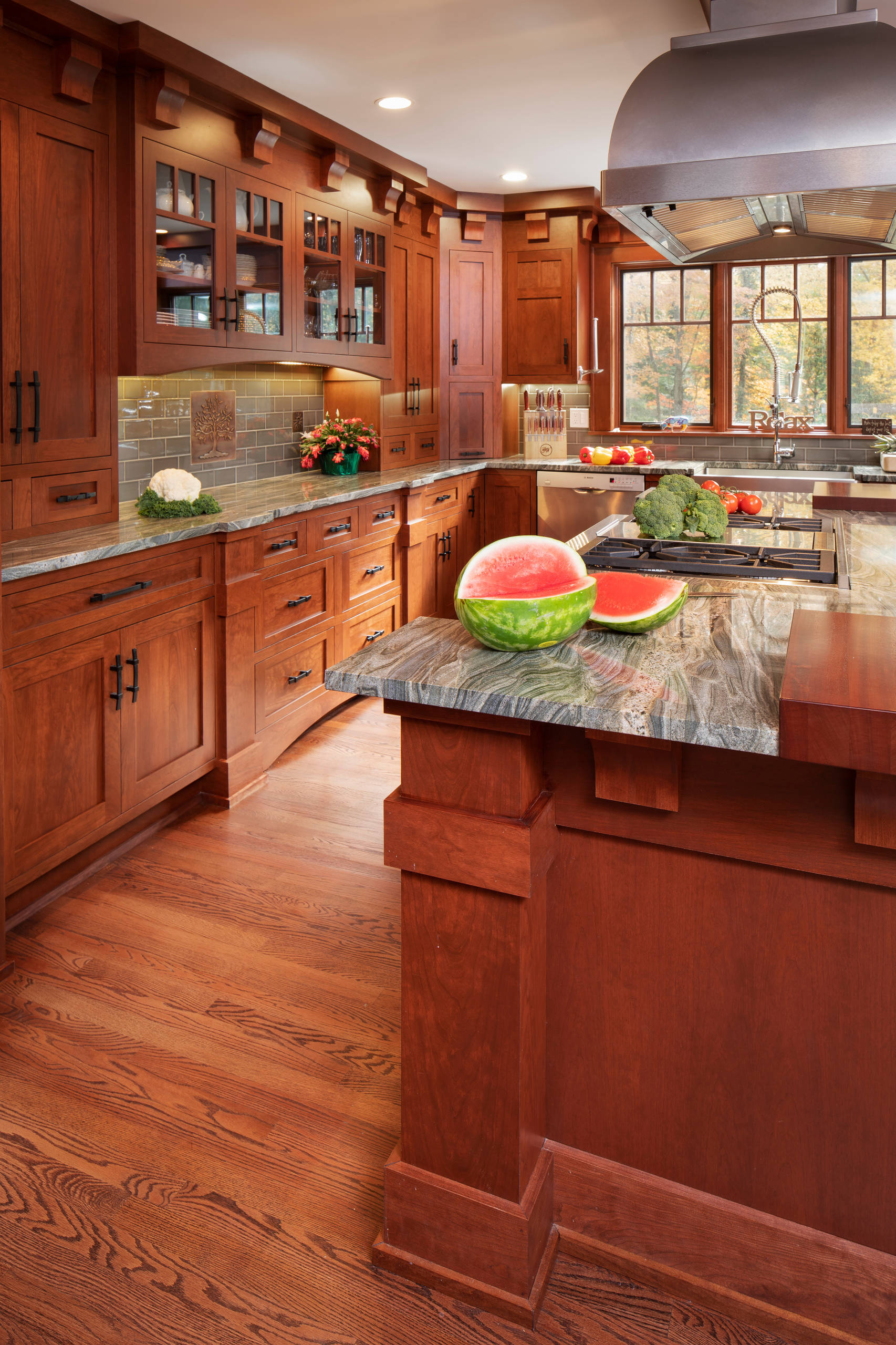
1. Classic Farmhouse Red with Natural Wood Countertops
This stunning farmhouse kitchen showcases the perfect marriage of red painted cabinets and natural wood countertops. The deep red base cabinets ground the space while butcher block countertops add warmth and functionality. The combination creates a cozy, lived-in feel that’s perfect for family gatherings.
Key Design Elements:
- Deep red painted base cabinets
- Natural wood countertops
- White upper cabinets for balance
- Exposed wood beams

2. Cherry Wood Kitchen with Rich Red Finish
Cherry wood naturally darkens to a beautiful red hue over time, making it an ideal choice for red and wood kitchen designs. This kitchen features rich cherry cabinets with their natural red undertones, complemented by warm wood flooring and traditional styling.
Design Features:
- Natural cherry wood cabinets
- Warm red wood grain
- Traditional raised panel doors
- Coordinating wood trim

3. Contemporary Red Island with Wood Accents
A bold red kitchen island serves as the focal point in this contemporary design, surrounded by white cabinetry and complemented by natural wood flooring. This approach allows you to incorporate red without overwhelming the space.
Standout Elements:
- Vibrant red kitchen island
- White perimeter cabinets
- Natural wood floors
- Clean, contemporary lines
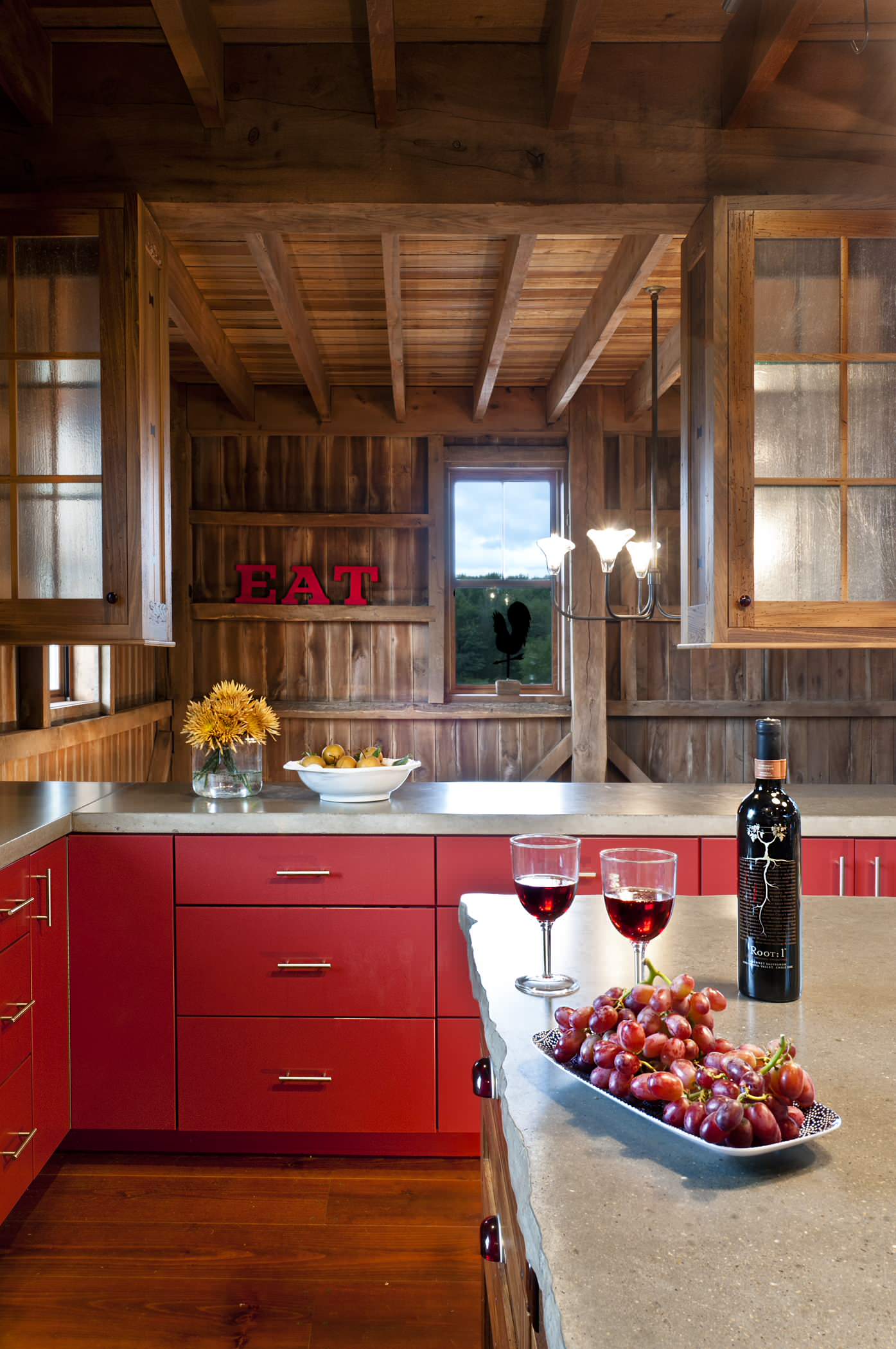
4. Rustic Red Barn-Style Kitchen
Embrace the rustic charm with barn red cabinets and reclaimed wood elements. This style pays homage to traditional American farmhouse design while creating a space that feels both historic and fresh.
Rustic Elements:
- Barn red cabinet finish
- Reclaimed wood beams
- Stone or brick accents
- Vintage-inspired hardware
5. Burgundy Cabinets with Light Wood Contrast
Deep burgundy red cabinets paired with light wood create a sophisticated contrast that’s both elegant and welcoming. This color combination works particularly well in traditional and transitional kitchen designs.
Color Palette:
- Deep burgundy/wine red cabinets
- Light wood countertops or accents
- Neutral walls
- Brass or bronze hardware
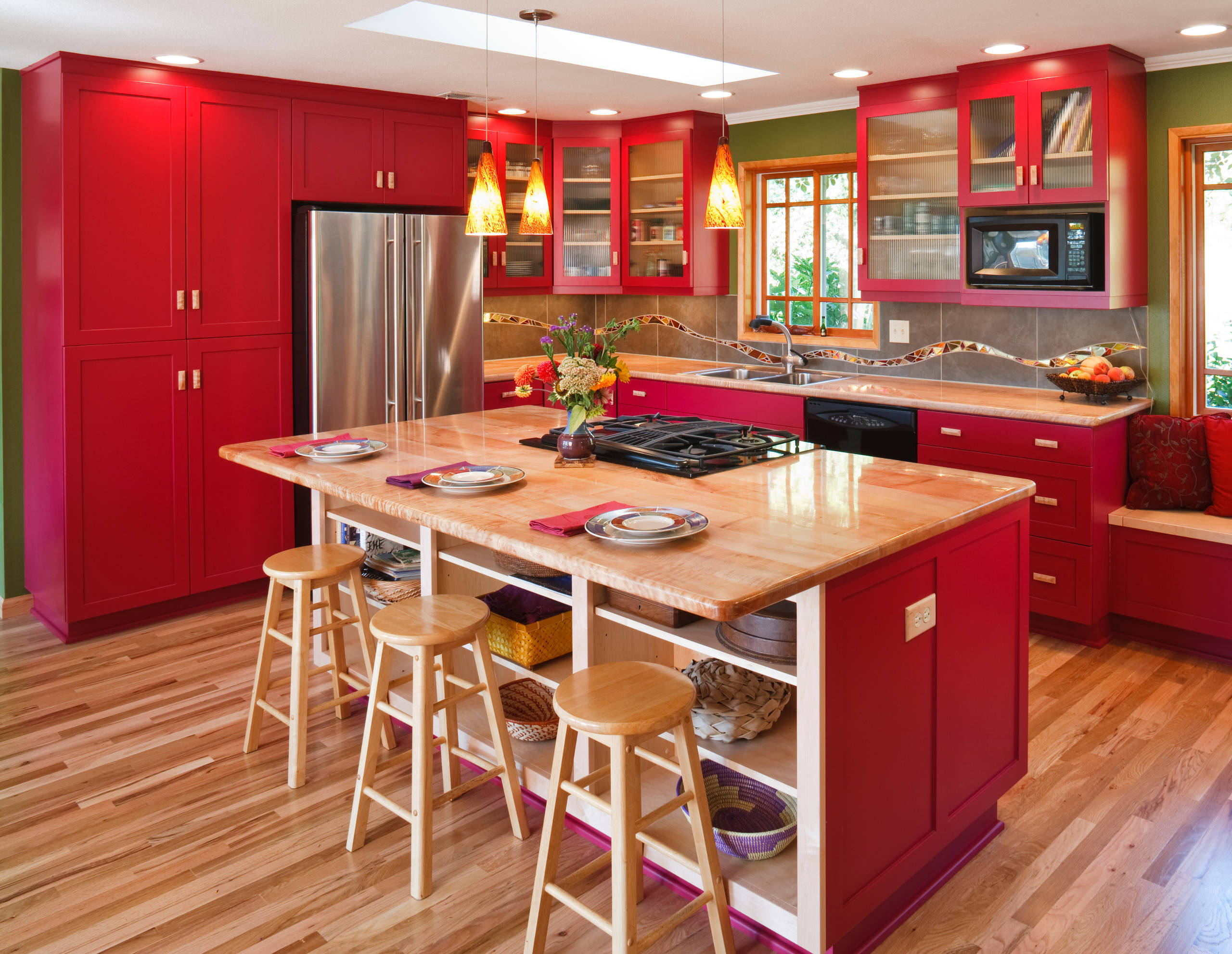
6. Modern Red and Wood Two-Tone Design
This contemporary approach features sleek red base cabinets combined with natural wood upper cabinets or open shelving. The contrast creates visual interest while maintaining a clean, modern aesthetic.
Modern Features:
- Flat-panel red cabinets
- Natural wood upper storage
- Minimalist hardware
- Clean lines throughout
7. Terracotta Red with Natural Wood Beams
Terracotta red offers a softer, more earthy alternative to bright red, especially when paired with exposed wood beams and natural textures. This combination creates a Mediterranean-inspired kitchen with Old World charm.
Design Elements:
- Terracotta red cabinets
- Exposed wood ceiling beams
- Natural stone or tile backsplash
- Warm earth-tone palette
8. Traditional Red Shaker Style with Wood Details
Shaker-style cabinets in classic red provide timeless appeal, especially when combined with wood countertops and traditional details. This style works well in both historic and newly built homes.

Traditional Features:
- Shaker-style cabinet doors
- Classic red finish
- Wood countertops
- Period-appropriate hardware
9. Brick Red with Warm Wood Tones
Brick red offers a muted, sophisticated alternative that pairs beautifully with warm wood tones. This color combination creates a cozy, inviting atmosphere perfect for family kitchens.
Warm Elements:
- Brick red cabinet finish
- Warm wood flooring
- Natural wood trim
- Copper or brass accents
10. Red Lacquer with Dark Wood Accents
For a more dramatic look, high-gloss red lacquer cabinets paired with dark wood create a sophisticated, contemporary kitchen with Asian-inspired elements.

Luxury Features:
- High-gloss red finish
- Dark wood accents
- Modern hardware
- Sleek contemporary design
Source: Foshan Hanse Industrial
11. Vintage Red with Reclaimed Wood Features
Combine vintage red paint finishes with reclaimed wood elements for a kitchen that tells a story. This approach works particularly well in restored homes or new builds seeking character.
Vintage Elements:
- Distressed red paint finish
- Reclaimed wood shelving
- Vintage hardware
- Antique accessories
12. Coral Red with Light Wood Contrast
Coral or salmon red offers a unique alternative that’s both bold and sophisticated. When paired with light wood elements, it creates a fresh, contemporary look that’s unexpected and beautiful.

Fresh Elements:
- Coral/salmon red finish
- Light wood countertops
- Modern appliances
- Clean contemporary lines
13. Red Kitchen Island with Wood Perimeter Cabinets
Create visual interest by using red for the kitchen island while keeping perimeter cabinets in natural wood tones. This approach provides a stunning focal point without overwhelming the space.
Island Focus:
- Red painted island
- Natural wood perimeter cabinets
- Coordinating hardware
- Balanced color distribution
14. Mahogany Red with Rich Wood Grain
Mahogany’s naturally rich red-brown color creates depth and luxury in kitchen design. This wood species offers beautiful grain patterns and develops a deeper red patina over time.
Luxury Wood Features:
- Rich mahogany cabinets
- Natural red-brown tones
- Beautiful wood grain
- Traditional styling
15. Scandinavian-Inspired Red with Light Wood
Scandinavian design principles can incorporate red through muted tones paired with light wood elements, creating a kitchen that’s both cozy and minimalist.

Scandinavian Elements:
- Muted red cabinet finish
- Light wood accents
- Minimal hardware
- Clean, simple lines
Design Tips for Red and Wood Kitchens
1. Balance is Key
When incorporating red and wood, balance is essential. Use the 60-30-10 rule: 60% neutral tones, 30% wood tones, and 10% red accents, or adjust ratios based on your desired intensity.
2. Consider Natural Light
Red can appear differently throughout the day. Test paint colors and wood stains in various lighting conditions to ensure you love the combination at all times.
3. Hardware Selection
Choose hardware that complements both red and wood elements. Brass, copper, and oil-rubbed bronze work particularly well with this color combination.
4. Backsplash Coordination
Select backsplash materials that bridge the gap between red and wood. Natural stone, subway tiles, or wood planks can all work depending on your style preference.
5. Flooring Considerations
Wood flooring in complementary tones, natural stone, or even concrete can provide the perfect foundation for red and wood kitchens.
Frequently Asked Questions About Red and Wood Kitchens
The 60-30-10 Rule:
- 60% neutral tones: Walls, ceiling, major surfaces
- 30% wood tones: Flooring, countertops, some cabinets
- 10% red accents: Island, lower cabinets, or accent pieces
Alternative approaches:
- Red island only: Focal point without overwhelming
- Red lowers, wood uppers: Two-tone balance
- Wood cabinets, red accents: Subtle red through accessories
- All red with wood counters: Bold statement with natural warmth
Key: Adjust ratios based on your desired intensity and natural light.
Popular red shades for kitchens:
- Cherry red: Rich, traditional — pairs with warm woods
- Barn red: Rustic, muted — perfect with reclaimed wood
- Burgundy/wine: Elegant, sophisticated — works with dark woods
- Terracotta: Earthy, Mediterranean — pairs with natural oak
- Brick red: Warm, inviting — complements warm wood tones
- Coral/salmon: Fresh, contemporary — stunning with light woods
- Crimson: Bold, dramatic — best as accent only
Wood pairing guide:
- Light woods (maple, birch): Any red shade works
- Medium woods (oak, cherry): Burgundy, terracotta, brick
- Dark woods (walnut, mahogany): Deep reds, burgundy
Best hardware finishes:
- Brass: Warm, classic — beautiful with barn red and cherry
- Copper: Rustic warmth — perfect with terracotta and brick red
- Oil-rubbed bronze: Traditional elegance — suits burgundy
- Antique brass: Vintage appeal — pairs with distressed red
- Matte black: Modern contrast — works with contemporary reds
Hardware style tips:
- Rustic kitchens: Cup pulls, bin pulls, wrought iron
- Traditional: Classic knobs, simple pulls
- Contemporary: Sleek bar pulls, minimal hardware
- Farmhouse: Vintage-inspired latches, cup pulls
Strategic red placement options:
Start small (recommended for beginners):
- Red kitchen island only
- Red lower cabinets, neutral uppers
- Red accent wall with wood cabinets
- Red pantry door or hutch
Medium intensity:
- Red base cabinets, wood or white uppers
- Two-tone red and wood throughout
- Red island + matching red accent pieces
Bold statement:
- All red cabinets with wood countertops
- Red throughout with wood floor/beams
Tip: Consider your kitchen size — smaller kitchens benefit from less red to avoid feeling closed in.
Backsplash options by style:
Farmhouse/Rustic:
- White subway tile (classic, timeless)
- Beadboard paneling
- Natural stone
- Reclaimed wood planks
Traditional:
- Marble or granite
- Ceramic tile with pattern
- Tumbled travertine
Contemporary:
- Large format porcelain
- Glass tile
- Stainless steel
- Quartz slab
Color guidance: Neutral backsplashes (white, cream, gray) work best to let the red and wood shine. Avoid competing bold colors.
Lighting considerations:
- North-facing kitchens: Red can appear darker/muted — choose brighter reds
- South-facing kitchens: Red will appear more vibrant — deeper shades work well
- East-facing: Warm morning light enhances red beautifully
- West-facing: Afternoon sun intensifies red — consider muted shades
Testing tips:
- Paint large samples on poster board
- View at different times of day
- Check under artificial lighting too
- Consider how wood tones look alongside
Under-cabinet lighting: Essential for red kitchens — illuminates work surfaces and shows true colors.
Flooring options:
Wood flooring:
- Light oak — creates contrast with red
- Medium walnut — warm, cohesive feel
- Wide plank — rustic farmhouse look
- Herringbone pattern — traditional elegance
Other materials:
- Natural stone: Slate, travertine, limestone
- Tile: Porcelain wood-look, terracotta
- Concrete: Polished for contemporary red kitchens
- Brick: Perfect with barn red cabinets
Avoid: Red-toned flooring that competes with red cabinets.
Red and wood is timeless because:
- Natural wood never goes out of style
- Red has been used in kitchens for centuries
- The combination evokes warmth and tradition
- Works across multiple design styles
Timeless red choices:
- Cherry wood with natural red undertones
- Barn red — classic Americana
- Burgundy — elegant and sophisticated
- Terracotta — Mediterranean timelessness
Avoid trend-specific: Very bright/neon reds or overly glossy finishes that may feel dated.
Investment tip: Classic red shades paired with natural wood will maintain appeal for decades.
Non-permanent red additions:
- Red appliances: Toaster, mixer, kettle
- Red bar stools: Easy swap for instant color
- Red light fixtures: Pendants over island
- Red textiles: Curtains, rugs, towels
- Red dishware: Displayed on open shelves
- Red artwork: Kitchen-appropriate prints
Semi-permanent options:
- Paint one accent wall red
- Add red tile backsplash
- Paint inside of open shelving red
- Red cabinet interiors (surprise color!)
Try before committing: Live with red accents before painting cabinets.
Best countertops for red cabinets:
Wood countertops:
- Butcher block — warm, farmhouse feel
- Live edge — rustic statement
- Light maple — contrast with dark reds
- Walnut — rich complement to burgundy
Stone options:
- White marble — elegant contrast
- Cream granite — warm neutral
- Gray quartz — modern balance
- Black granite — dramatic with bright red
Other materials:
- Concrete — contemporary industrial
- Copper — stunning with muted reds
- Soapstone — traditional charm
Avoid: Red or orange-toned counters that compete with cabinets.
Conclusion
Red and wood kitchens offer endless possibilities for creating spaces that are both dramatic and welcoming. Whether you prefer the rich depth of cherry wood, the rustic charm of barn red, or the contemporary appeal of glossy lacquer, this color combination provides a foundation for kitchens with genuine personality and warmth.
The key to success lies in finding the right balance between the bold energy of red and the natural warmth of wood. By carefully considering proportions, lighting, and complementary materials, you can create a kitchen that’s not only beautiful but also timeless.


