

The basement is often the last frontier of home organization — a place where holiday decorations, outgrown sports gear, and “we might need this someday” boxes go to multiply. But with a few smart systems, your basement can become one of the most functional storage zones in your home. Whether you’re working with a finished lower level or a raw, unfinished space, these 15 basement organization ideas will help you reclaim every square foot. Grab a notepad, and let’s dig in.
1. Start with Heavy-Duty Metal Shelving
The single best investment for basement storage is a set of freestanding heavy-duty metal shelving units. Unlike flimsy plastic shelves, steel units rated for 2,000+ pounds handle paint cans, toolboxes, and stacked totes without bowing. Choose adjustable shelves so you can reconfigure as your needs change, and pick wire-mesh or open styles that let air circulate — important in basements where humidity can be an issue. Anchor taller units to wall studs for earthquake and tip-over safety, and always keep the heaviest items on the bottom shelves. Keep a few inches of clearance between shelving and exterior walls too, so condensation can’t transfer to your boxes.
Photo credit: Amazon
🛒 Shop This Idea


Prices as of Nov 9, 2026 6:54 AM GMT+0000. Product prices and availability are accurate as of the date/time indicated and are subject to change. As an Amazon Associate, we earn from qualifying purchases.
2. Use Clear, Stackable, Labeled Bins
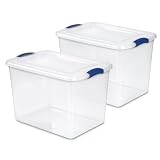
Cardboard boxes are a basement’s worst enemy — they absorb moisture, attract pests, and hide what’s inside. Swap them for clear, stackable plastic bins with tight-fitting lids, and label every single one on at least two sides. Because you can see through the walls, you’ll cut your search time in half, and the lids keep dust and dampness out. Choose a consistent bin size so stacks stay stable and shelf space is used efficiently. For a beautiful example of this system in action, professional organizers recommend labeling with large, high-contrast text or a label maker so family members can actually put things back where they found them.
Photo credit: Small Stuff Counts
🛒 Shop This Idea


Prices as of Nov 9, 2026 4:22 PM GMT+0000. Product prices and availability are accurate as of the date/time indicated and are subject to change. As an Amazon Associate, we earn from qualifying purchases.
3. Go Up: Install Overhead Ceiling Storage
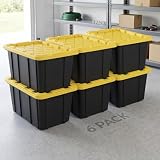
When floor space runs out, look up. Ceiling-mounted storage racks turn unused joist space into a home for lightweight, seasonal items like camping gear, artificial trees, and suitcases. Most systems adjust in height from roughly 22 to 40 inches below the ceiling and hold 250–600 pounds when properly installed into joists. This is one of the most valuable unfinished basement storage tricks because it keeps bulky but rarely used items completely off the floor — out of the way of potential water damage and daily foot traffic. Just be sure items are light enough to lift overhead safely, and label the rack edges so you’re not unloading everything to find one bin.
Photo credit: Amazon
🛒 Shop This Idea


Prices as of Nov 9, 2026 4:42 AM GMT+0000. Product prices and availability are accurate as of the date/time indicated and are subject to change. As an Amazon Associate, we earn from qualifying purchases.
4. Create a Pegboard Tool Wall
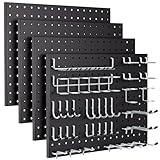
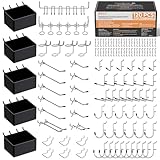
A pegboard wall is the classic workshop solution for a reason: every tool visible, every tool reachable. Mount a metal or wood pegboard above your workbench or on an empty basement wall, then use hooks, small shelves, and bin accessories to build a layout that matches how you actually work. Trace tool silhouettes with a marker so everything gets returned to its spot — a trick mechanics have used for decades. Pegboards also flex with you: reposition hooks anytime your toolkit changes. For damp basements, metal pegboard panels resist warping better than fiberboard, and a coat of paint adds brightness to an otherwise dark corner of the basement.
Photo credit: Sawdust Girl
🛒 Shop This Idea

Prices as of Nov 9, 2026 4:22 PM GMT+0000. Product prices and availability are accurate as of the date/time indicated and are subject to change. As an Amazon Associate, we earn from qualifying purchases.
5. Divide the Basement into Zones
The biggest mistake in basement organization is treating the whole room as one giant storage pile. Instead, divide the space into functional zones: holiday decor, tools and maintenance, sports gear, keepsakes, and household overflow. Physically mark the zones with shelving placement or even painter’s tape on the floor during setup. This is how professional organizers approach every large space — grouping like with like, then assigning each category a permanent home. Zone-mapping also reveals duplicate purchases and forgotten clutter during the initial sort. Once everything has an address, maintaining order becomes almost automatic, because there’s a clear right answer to “where does this go?”
Photo credit: The Spruce
🛒 Shop This Idea

Prices as of Nov 9, 2026 4:22 PM GMT+0000. Product prices and availability are accurate as of the date/time indicated and are subject to change. As an Amazon Associate, we earn from qualifying purchases.
6. Corral Sports Equipment in a Rolling Rack
Balls, bats, helmets, and hockey sticks have a way of colonizing the entire basement floor. A dedicated sports equipment organizer — ideally one with wheels, wire bins, and hooks for bats and rackets — gives all of it a single home near the door kids actually use. Rolling designs are especially handy because the whole rack can be pulled out for cleaning or rolled to the driveway on game day. Look for a unit with at least three wire bins for balls, side hooks for bats and sticks, and a heavy steel frame rated for 100+ pounds. Assign each family member their own bin to end the “whose gear is this?” arguments for good.
Photo credit: Lowe’s
🛒 Shop This Idea


Prices as of Nov 9, 2026 4:22 PM GMT+0000. Product prices and availability are accurate as of the date/time indicated and are subject to change. As an Amazon Associate, we earn from qualifying purchases.
7. Hang Bikes Vertically on the Wall
Bicycles eat enormous floor space, and in a basement — where every open foot matters — wall-mounted vertical bike hooks are a game changer. Swivel-style wall mounts let you rotate the bike flat against the wall when it’s stored and swing it out for easy loading, holding up to 66 pounds each. Mount hooks so the front wheel clears the floor with about 6 inches to spare, and install them into studs or use a backing board. For a family fleet, stagger hooks at two heights so handlebars don’t collide. Vertical hanging keeps bikes out of the path of the car, the laundry, and the treadmill while protecting them from floor-level damp.
Photo credit: Amazon
🛒 Shop This Idea


Prices as of Nov 9, 2026 4:22 PM GMT+0000. Product prices and availability are accurate as of the date/time indicated and are subject to change. As an Amazon Associate, we earn from qualifying purchases.
8. Add a Rolling Utility Cart for Flexible Storage
Not everything in a basement deserves permanent real estate. A slim rolling storage cart slips into narrow gaps beside the washer, behind shelving, or under the stairs, and can be wheeled wherever the project is. Use one for cleaning supplies, another for craft or gift-wrapping materials, or a third as a mobile project station with tools and fasteners. Look for a lockable-wheel model with bins or drawers so nothing tips in transit. Rolling carts are one of the most affordable basement organization ideas on this list — often under $50 — and they make even awkward dead spaces between appliances and walls fully functional.
Photo credit: Walmart
🛒 Shop This Idea
As an Amazon Associate, we earn from qualifying purchases.
9. Build a Proper Workbench Station
If your basement doubles as the household workshop, a real workbench — not a card table — transforms how you use the space. Choose or build a bench with a sturdy top, integrated drawers or shelving below, and wall storage directly above so tools live within arm’s reach. Position it near outlets and good lighting, and consider a bench with a built-in pegboard to pair with idea #4. A dedicated station means projects actually get finished, because setup and cleanup stop being a chore. Even in an unfinished basement, a 6-foot bench along one wall instantly creates a “workshop zone” that keeps sawdust and tools from drifting into storage areas.
Photo credit: DIY Playbook
🛒 Shop This Idea
As an Amazon Associate, we earn from qualifying purchases.
10. Store Holiday Decorations in Dedicated, Marked Bins
Holiday decor is the single biggest category in most basements, so give it its own system. Use color-coded bins — red and green for Christmas, orange for fall, pastel for Easter — or stick with one neutral bin style and use bold printed labels. Store fragile ornaments in divided boxes to prevent heartbreak next December, and keep wreaths and garlands in clear bags so they stay dust-free and visible. Pack everything back into the same labeled bins each year and shelve them together in one zone (see idea #5). When the whole holiday lives in two or three bins on one shelf, decorating takes minutes instead of a full weekend of hunting.
Photo credit: Grid + Glam
🛒 Shop This Idea
As an Amazon Associate, we earn from qualifying purchases.
11. Set Up a Basement Pantry or Bulk-Food Shelf
Cool, dark basements are ideal for bulk food and canned goods storage — if you keep items off the floor and away from exterior walls. Install sturdy shelving (metal is best for food safety and easy cleaning) and organize cans by category with the oldest stock in front, following first-in, first-out rotation. Use can dispensers or stackable racks to double your capacity, and keep everything in sealed containers to deter pests. Leave an inch or two of airflow behind the shelves and run a dehumidifier nearby if your basement runs damp. A well-run basement pantry is one of the most practical basement organization ideas for large families and bulk shoppers alike.
Photo credit: Vecteezy
🛒 Shop This Idea


Prices as of Nov 9, 2026 4:22 PM GMT+0000. Product prices and availability are accurate as of the date/time indicated and are subject to change. As an Amazon Associate, we earn from qualifying purchases.
12. Give the Home Gym Its Own Organized Corner
If a treadmill or weight set has taken over your basement, finish the job with real gym organization. Wall-mounted racks hold dumbbells, kettlebells, and medicine balls off the floor, while vertical hooks keep resistance bands and jump ropes untangled. Add a small shelf or cubby for towels, water bottles, and headphones, and use a large mat to define the workout zone visually. Keeping gear visible and easy to re-rack genuinely increases how often you’ll use it — the same principle that makes gym floors work. Even a compact corner with a dumbbell rack and a mat turns leftover basement space into the most-used room in the house.
Photo credit: Abby Organizes
🛒 Shop This Idea


Prices as of Nov 9, 2026 4:22 PM GMT+0000. Product prices and availability are accurate as of the date/time indicated and are subject to change. As an Amazon Associate, we earn from qualifying purchases.
13. Optimize the Laundry Corner with Shelving
Most basement laundry zones are wasted-space goldmines. Add a shelf or cabinet over the washer and dryer for detergent and supplies, wire baskets on side walls for stray socks, and a slim rolling cart (idea #8) in the gap beside the machines for sorting. A wall-mounted drying rack folds flat when not in use, and a hanging rod under the overhead shelf gives air-dry items somewhere to drip. Keep a small caddy for stain removers so everything lives within one arm’s reach of the machines. In an unfinished basement laundry area, even a simple melamine shelf and a tension rod take an afternoon to install and double your usable counter space.
Photo credit: Better Homes & Gardens
🛒 Shop This Idea


Prices as of Nov 9, 2026 4:22 PM GMT+0000. Product prices and availability are accurate as of the date/time indicated and are subject to change. As an Amazon Associate, we earn from qualifying purchases.
14. Protect Keepsakes with Archival Storage Boxes
Photos, documents, baby clothes, and heirlooms need different treatment than everyday storage — basement humidity will destroy cardboard and glue over time. Use acid-free, lignin-free archival boxes for anything irreplaceable, and skip standard plastic totes for photographs, which can trap moisture and cause sticking. Line metal shelving in your driest zone and keep the boxes elevated off the floor, ideally at least 6 inches, in case of a minor water event. Label each box by year or family branch, and add silica gel packs as cheap insurance against damp. A small investment in archival materials preserves decades of family history that no bin from the big-box store can protect.
Photo credit: Amazon
🛒 Shop This Idea
As an Amazon Associate, we earn from qualifying purchases.
15. Unlock the Space Under the Basement Stairs
The triangular cavity under the stairs is basement storage you already own but probably can’t reach. Options range from simple to ambitious: freestanding shallow shelving units that follow the slope, pull-out drawers on sliders, or built-in doors for a true under-stairs closet. This spot is perfect for items you access seasonally — luggage, pet supplies, paint — because it’s right beside the stairs and easy to grab on the way up. Measure carefully, since headroom slopes fast, and favor open shelving or clear bins so the deep back corner doesn’t become a black hole. It’s the ideal finishing touch: zero new square footage, dramatically more storage.
Photo credit: Shelterness
🛒 Shop This Idea


Prices as of Nov 9, 2026 4:22 PM GMT+0000. Product prices and availability are accurate as of the date/time indicated and are subject to change. As an Amazon Associate, we earn from qualifying purchases.
Frequently Asked Questions
How do I start organizing a messy basement? Start by sorting everything into four piles: keep, donate, trash, and relocate. Only after the purge should you buy shelving and bins — otherwise you’re organizing clutter. Then apply the zone system from idea #5.
What should not be stored in a basement? Avoid storing photographs, important documents, electronics, leather, and anything irreplaceable directly on a damp basement floor. If you must keep them there, use archival boxes (idea #14) on elevated metal shelving and run a dehumidifier.
What is the best shelving for an unfinished basement? Freestanding heavy-duty steel shelving is the top choice — it handles heavy loads, resists moisture better than particleboard, requires no wall mounting, and can be rearranged as your storage needs evolve.
How do I keep moisture from ruining basement storage? Use plastic bins with gasketed lids instead of cardboard, keep items a few inches off concrete floors and away from exterior walls, promote airflow behind shelving, and run a dehumidifier to hold humidity near 50%.
How much does it cost to organize a basement? A functional setup using metal shelving, clear bins, and a few wall accessories typically runs $200–$600 for an average basement — far less than renting off-site storage, and it pays for itself within months.
Final Thoughts
A organized basement doesn’t happen in one Saturday, and it doesn’t need to. Start with the two highest-impact moves — purging first, then installing heavy-duty shelving (idea #1) — and let the rest of these basement organization ideas build on that foundation zone by zone. Within a few weekends, the space you’ve been avoiding can become the hardest-working storage in your home: pantry, workshop, gym, and everything in between. The best time to start was last year; the second-best time is this weekend.


