

If you’re planning housing for goats, the best sheds balance weather protection, airflow, easy cleaning, and a look that fits your property. A good goat shed does not need to be huge or expensive, but it does need to be dry, secure, and designed around how goats actually behave. The examples below show real-world ways to combine practical features like modular stalls, ventilation, and covered loafing space with stylish details like board-and-batten siding, Dutch doors, cupolas, and clean farmhouse lines. Source
1) Convert a Simple Shed Into a Dedicated Goat Shelter
One of the most practical starting points is a converted garden shed or small outbuilding. This works especially well for small herds, companion goats, or backyard setups where you want a structure that already blends into the property. Horizon Structures notes that common options include converting an existing shed, repurposing a playhouse, or using a prefab shelter, which makes this one of the easiest ideas for beginners. Source

Why it works for SEO readers and real farms:
- Lower starting cost than a custom barn
- Faster to set up
- Easy to style with paint, trim, and matching roofing
- Ideal for a small homestead or backyard herd
2) Build a Two-Stall Shed With a Separate Milking Area
A dedicated milking zone instantly makes a goat shed more practical. The Inspired Workshop example uses two 4’x8′ stalls plus a separate 4’x8′ milking area, with access from both front and back. That kind of layout helps with herd flow, cleaning, and rainy-day chores. It also gives your shed a more intentional, professional look than a basic single-room shelter. Source
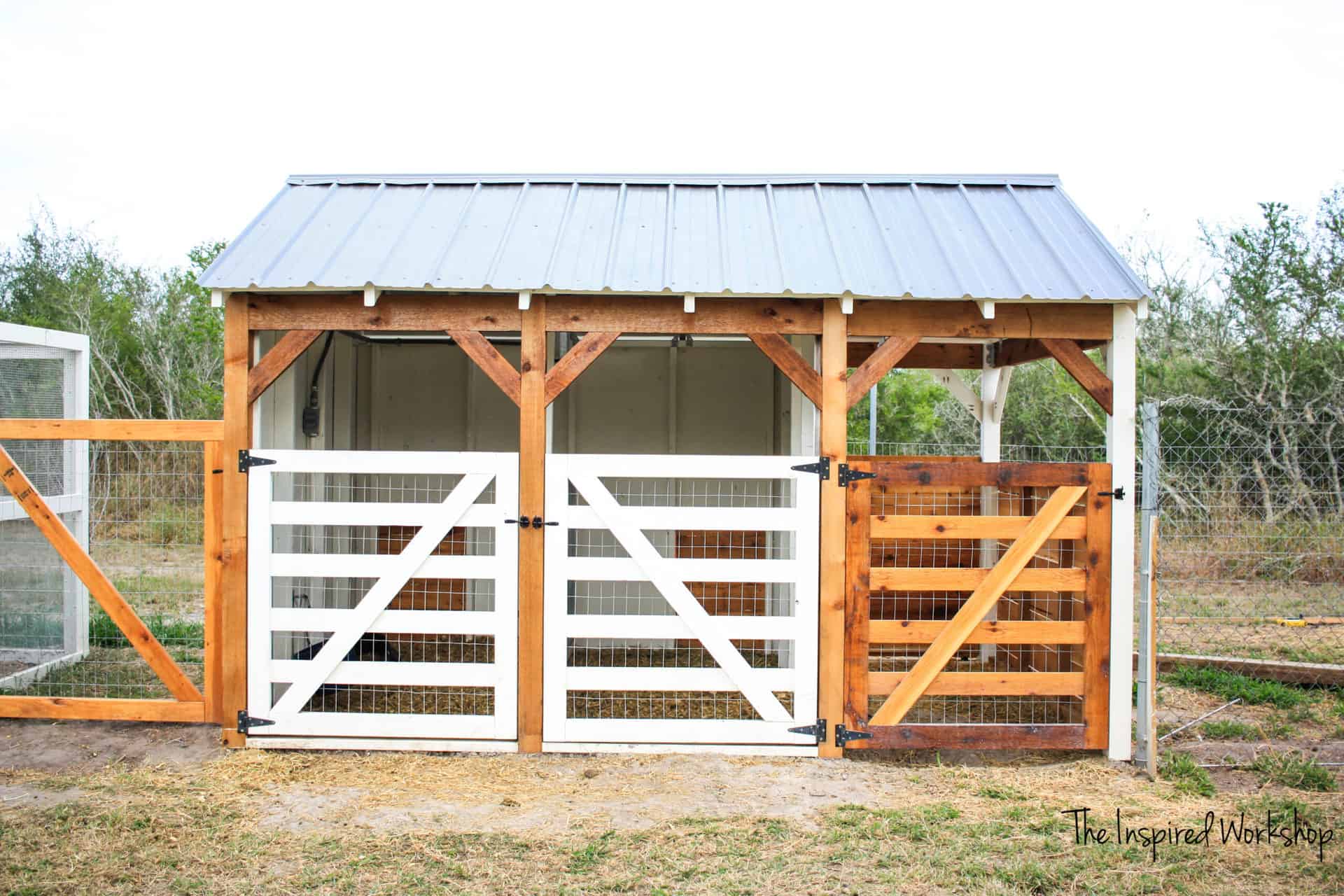
Practical takeaway:
If you milk goats regularly, separating the milking space from the sleeping stalls helps keep the process cleaner and easier.
3) Use a Dutch Door for Airflow and Security
A Dutch door is one of the best combinations of style and function in goat housing. Twelve On Main highlights how the top half can stay open for airflow and visibility while the bottom half stays latched to keep goats safely inside. It delivers a classic farmhouse aesthetic while also improving ventilation and daily management. Source

Why this idea is so popular:
- Improves fresh air circulation
- Keeps goats contained
- Looks more polished than a plain full door
- Works especially well on small, stylish backyard barns
4) Add an Extended Roof or Covered Porch
Goats do not always want to stand fully indoors, but they do want protection from rain and sun. A roof extension or covered porch gives them a loafing area outside the main stall. Twelve On Main used a pitched roof with an extended overhang so goats could stay dry and shaded without going fully inside, which is both practical and visually appealing. Source
Best for:
- Mild to warm climates
- Small herds
- Owners who want a shelter that feels open and airy
5) Choose Board-and-Batten Siding, a Shake Roof, and a Cupola
If you want a goat shed that looks intentional rather than improvised, exterior finish matters. The Twelve On Main build combines white board-and-batten siding, a rustic shake roof, solar lighting, and a cupola to create a goat house that feels like part of a cohesive farmhouse property. Decorative elements like these do not have to reduce function—in this case, the cupola also supports the airy, ventilated feel of the building. Source
Style upgrade ideas:
- White or natural wood exterior
- Matching trim with other outbuildings
- Rustic or metal roofing
- Solar light near the entrance
6) Create a Separate Birthing or Isolation Pen
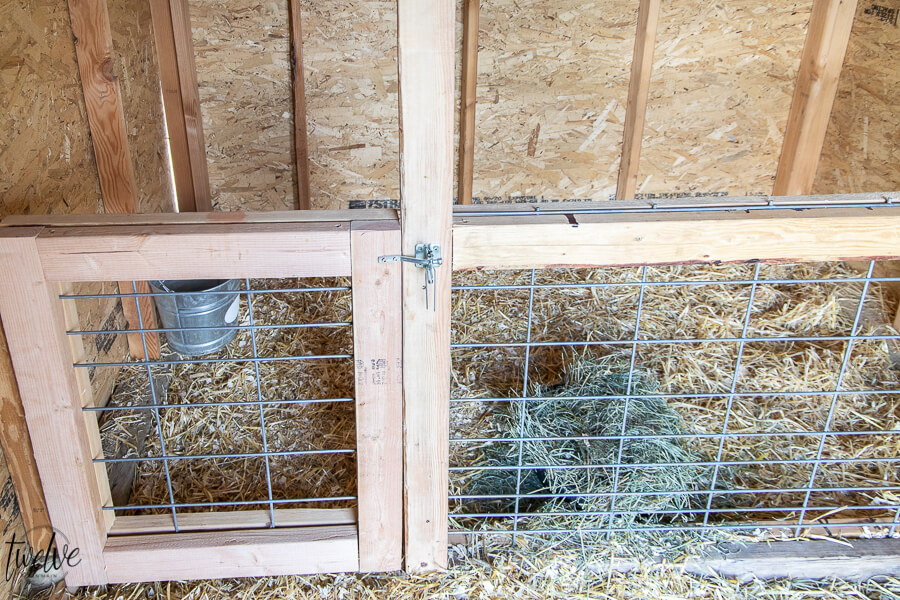
As your herd grows, one open shelter is usually not enough. A separate pen for kidding, recovery, or temporary isolation can make a major difference. Twelve On Main added a back pen for a doe with babies, while Horizon Structures also recommends planning extra space if you expect kids and breeding activity. Source Source
Why this matters:
- Helps protect newborn kids
- Makes monitoring easier
- Reduces stress during kidding
- Improves herd management in a small footprint
7) Use Modular Stalls and Sliding Barn Doors
A flexible interior layout gives you room to adapt. Weed ’em and Reap designed a 10′ x 16′ goat barn with three separate stalls that were not permanent, plus sliding barn doors instead of swinging ones. That design allows the space to function as separate pens when needed, or as one larger shelter when your herd setup changes. Source

Practical benefits:
- More flexible than fixed partitions
- Easier movement in tight aisles
- Better for changing herd size
- Great for owners who may add other livestock later
8) Prioritize Ventilation With Open Upper Walls, Soffits, or Vents
A stylish goat shed still has to stay healthy inside. Both Horizon Structures and Farmstead Guide emphasize that goats need good ventilation without cold drafts. Useful features include open soffits, ridge vents, gable vents, high vents, and lower fresh-air openings. Twelve On Main also left the upper section of the shed open for airflow. Source Source Source
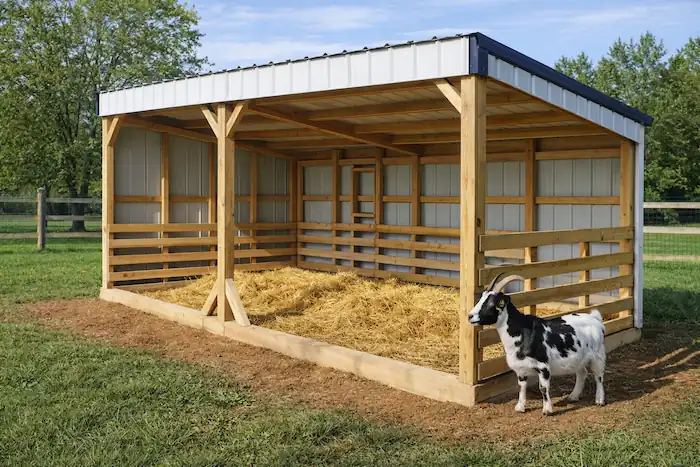
Ventilation checklist:
- Warm air should be able to escape high
- Fresh air should enter low
- Avoid sealing the shed too tightly
- Use mesh or hardware cloth to keep pests out
9) Pick Flooring and Bedding That Stay Dry and Easy to Manage
Dry footing is more important than fancy flooring. Farmstead Guide notes that concrete is durable and easy to clean, though it needs bedding for comfort; earth floors drain well but can get muddy; and raised wooden slats can help goats stay dry if built safely. Horizon Structures adds that rubber mats over concrete can help with dampness and reduce bedding needs, while The Inspired Workshop used the deep litter method in a no-floor design. Source Source Source
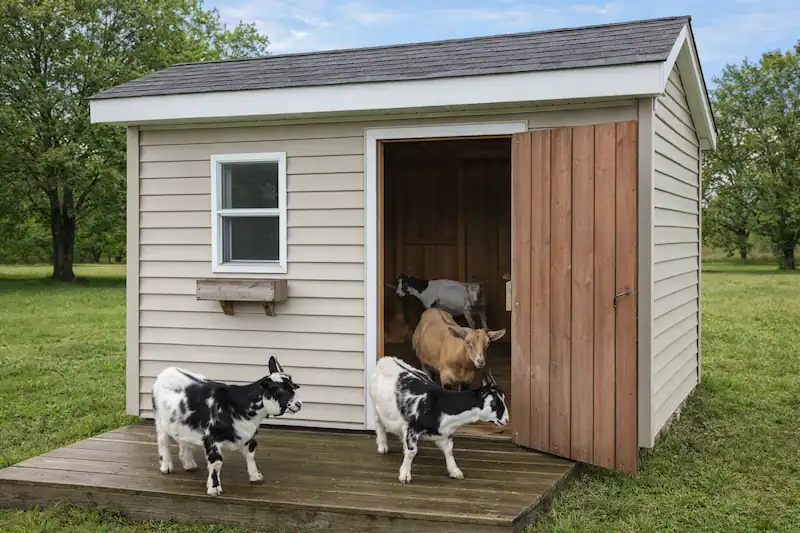
A practical rule:
Whatever floor you choose, your real goal is simple: keep the shed dry, cleanable, and comfortable.
10) Add Goat-Friendly Details Like Shelves, Wall Buckets, and Feeders
The best goat sheds work with goat behavior instead of fighting it. Horizon Structures recommends adding a strong shelf because goats love to climb, and Weed ’em and Reap installed hay feeders, water buckets with brackets, and feeders designed to help keep waste out. Twelve On Main also hung water pails to keep kids safer than ground-level bowls. These small functional details make a shed feel well-designed and far more polished. Source Source Source

Good add-ons to consider:
- Climbing shelf or platform
- Wall-mounted water buckets
- Hay feeder placement that reduces waste
- Secure latches goats cannot nudge open
What Makes a Goat Shed Both Practical and Stylish?
The best goat shed ideas usually combine these five traits:
- Dry interior
- Strong ventilation
- Predator protection
- Flexible layout for feeding, milking, or kidding
- Exterior finishes that match your home or barn style
That is why features like Dutch doors, overhangs, modular stalls, board-and-batten siding, cupolas, and solar lights show up again and again in the strongest real-world examples. Source Source Source
FAQ: Goat Shed Ideas
How big should a goat shed be?
Horizon Structures says a goat generally needs about a 4 x 5 housing space, with larger breeds or bigger group setups needing more room, often 30 square feet or more. Source
Is a three-sided shed enough for goats?
Farmstead Guide says a three-sided shed can work well for small to medium herds in milder climates, as long as it provides protection from wind and rain and still maintains good airflow. Source
What is the best style for a backyard goat shed?
For many small properties, a simple square shed with a pitched roof, Dutch door, and covered overhang offers one of the best mixes of appearance and function. Source
What should every goat shed include?
At minimum: dry bedding, ventilation, secure latches, predator protection, and enough room for goats to rest and move without crowding. Source Source
Final Thoughts
The most successful goat sheds are not necessarily the biggest or the most expensive. They are the ones designed around real herd routines: staying dry, moving air, cleaning easily, protecting kids, and giving goats a space they will actually use. If you want a shed that looks good too, details like board-and-batten siding, Dutch doors, roof overhangs, and modular interiors can make a simple shelter feel custom and polished. Source Source


